Optimizing PPC campaigns no longer just means adjusting bids or finding the best keywords. We are living through a time when the way people search for information is changing fast, and voice is becoming the main way we interact with technology.
Voice search and AI assistants have added a new dimension to online advertising, where relevance is measured by how a brand answers questions spoken naturally. Instead of the classic short phrases, people phrase complex requests in a conversational tone, and ad platforms are starting to recognize the intent behind each search.
We adapt PPC campaigns to this reality. We combine user behavior analysis with automation and artificial intelligence solutions, so your ads appear exactly when a user asks a question to which you have the right answer.
The goal of our marketing agency is to turn spontaneous searches into real conversions through an intelligently built performance marketing strategy.
The new paradigm: from classic search to voice interaction
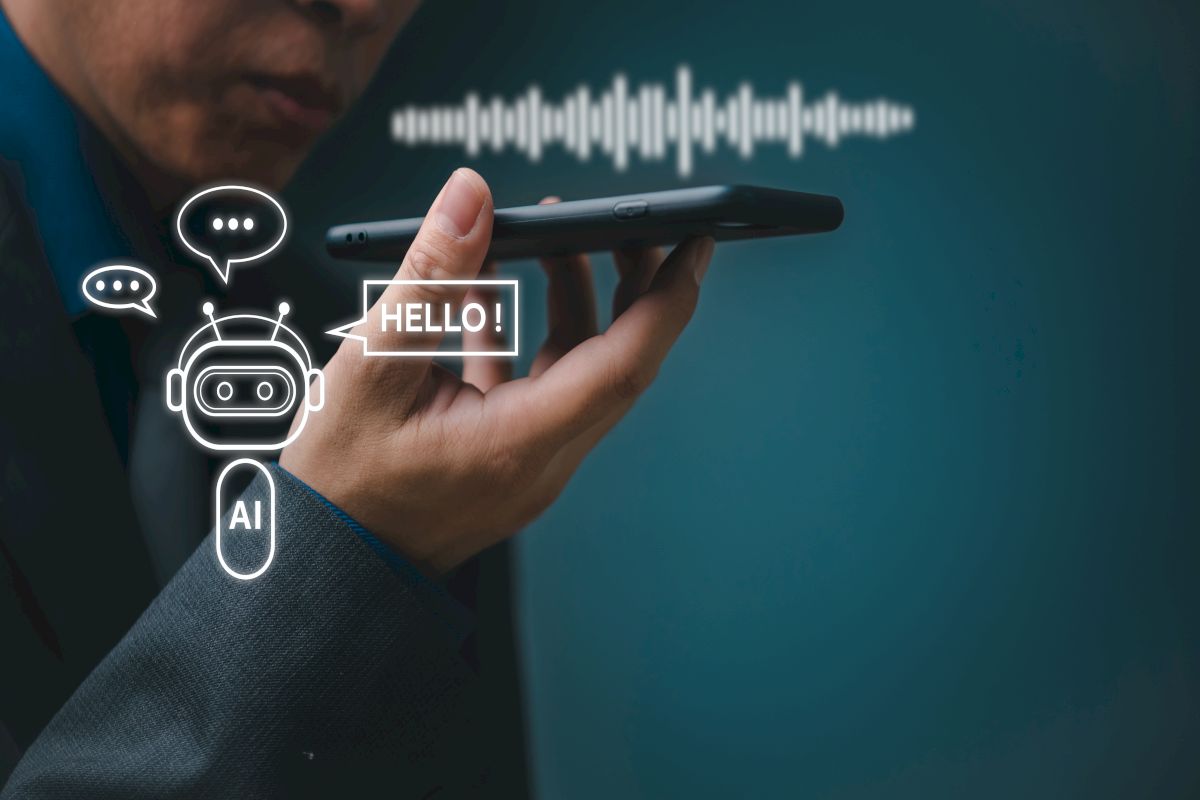
Voice search completely changes how PPC campaign optimization works. Instead of a simple “keyword”, what matters now is intent, tone and context. Voice assistants (Siri, Alexa, Google Assistant or ChatGPT) filter results based on how clear and natural the answer is. So a well-written ad is no longer enough: it has to feel like an authentic conversation between the brand and the user.
To respond effectively to these queries, PPC campaigns need to be rebuilt from the ground up. Here is how we adapt campaigns to voice and artificial intelligence:
- We analyze search behavior and identify the frequent questions users speak, not just type.
- We select conversational keywords, such as “where can I find”, “how can I”, “what is the best option”.
- We create ads that provide answers, because in voice search, users want the solution right away.
- We optimize the landing page so it delivers the information clearly, within the first few seconds.
This transformation is based on a deep understanding of how people interact with technology. That is why, in our marketing consulting services, we focus on correctly interpreting user intent, not just on the numbers in the platforms.
How can you adapt PPC campaigns for voice and AI?
- Keywords inspired by real conversations
People speak differently than they type. In campaigns optimized for voice, phrases need to sound natural. Instead of “SEO course Bucharest”, use variants like “where can I take a good SEO course in Bucharest?”. This kind of phrasing adds relevance and helps algorithms position you better in voice searches.
- Short, clear, human ads
An effective ad for voice search answers the question directly. Avoid abstract wording and use a conversational tone. When we work on our clients’ campaigns, we write copy that sounds natural and friendly but stays aligned with the brand.
- Landing pages tailored to intent
A landing page has to complete the answer given by the ad. For example, if someone asks “where can I create a Google Ads campaign?”, the page needs to explain the process concretely and offer a quick solution.
In our web design & development services, we create structures that focus on speed, clarity and mobile responsiveness, all important criteria for voice searches.
- Smart bidding and automation
Ad platforms have become smarter and smarter. With automated conversion-based bidding, artificial intelligence can adjust budgets in real time to deliver the best performance.
In our automation division, we use predictive data and integrated workflows to keep improving cost per conversion.
- Continuous monitoring and adjustment
No campaign stays unchanged. We regularly analyze the data, compare results between voice and typed searches, test new copy and adjust audiences. This way, PPC campaigns become living systems, able to keep adapting to user behavior.
Why is AI changing the rules of the game in online advertising?
Artificial intelligence is a strategic partner. It can identify behavior patterns that are impossible to spot manually and can learn how audiences react to different messages. In the campaigns we develop, AI is used for:
- Predicting purchase intent, based on context and device.
- Automatic audience segmentation, based on interaction history.
- Real-time budget optimization, to direct resources to the best-performing areas.
- Message personalization, so each user hears exactly what is relevant to them.
All these processes are part of a complete performance marketing approach, where every click is treated as a growth opportunity, not just a number in a report.
How do PPC, SEO and AI fit together in a coherent strategy?
Optimizing PPC campaigns for voice search does not work without a solid foundation of SEO and structured content. When a voice assistant picks up a question, it looks for sources it considers trustworthy.
Your website needs to be technically well optimized, fast and clearly structured. Our SEO optimization services perfectly complement paid advertising, giving your brand both organic and sponsored visibility.
What is more, artificial intelligence helps connect these channels. Data collected from PPC can be used to adapt organic content, and SEO traffic can feed remarketing segments. The result is a unified strategy in which every channel works toward the same goal: growing the brand.
Voice search and AI assistants are changing the rules, but they also offer a huge opportunity for brands that adapt quickly. Messages that feel human are the ones that win. Optimizing PPC campaigns for voice means a shift in perspective, a transition toward conversational, intelligent and empathetic marketing.
We turn these trends into concrete results. Whether you need consulting, a complete strategy or implementation, we help you build campaigns that speak naturally to your audience and perform in tomorrow’s digital world.

Specialists in SEO, GEO, performance marketing and web development, with 17 years of experience on projects in Romania and 23 other markets.